
404-633-4505 | Join Us On Sundays at 11AM!
404-633-4505 | Join Us On Sundays at 11AM!
Read the latest news for our church.
Sep 18, 2026
Can I tell you some Good News? Read the whole note, because I put at the end 🙂
Our Reshaped worship series comes to a close this Sunday. In the first sermon of this series, I shared that we would not reach the end and say “great. Mission accomplished.” Instead, my hope is that the lessons, thoughts, and ideas that have emerged during this series will carry forward throughout the rest of the year.
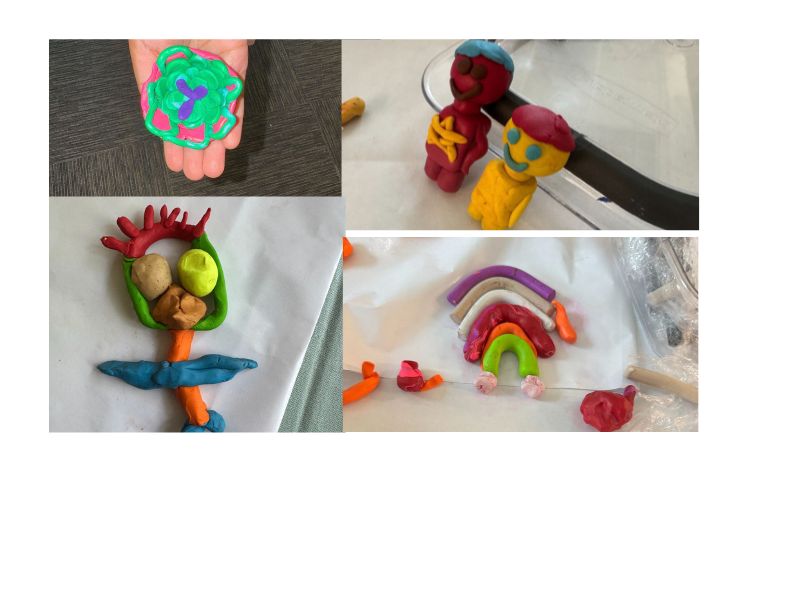
I have loved seeing and hearing how this series has impacted you! One member shared that they bought play-doh for the first time in their life after our first Sunday in the series. Others have noticed that play-doh now has multicolor cans and glitter, so they asked, and of course, were able to take more cans home.
In Messy Church, our kids took the idea of being made out of clay to new levels!
And, our young adults will do the same during our Pottery Night this Sunday. 3 folks came out for our on-site book chat for Everywhere You Look. We enjoyed a wonderful conversation about the churches we grew up, our church today, and what we hope for the future. I really do hope that more folks will engage with this timely read.
On Sunday, we’ll consider what it might look like to step into faith. We’ll sit with the story of Peter walking to Jesus.
Finally, it’s important to me that you know that August, and so far September too, saw an incredible increase in Sunday participation and engagement. Our average on-site attendance was higher than our average total attendance(onsite and online) for the same period in previous years:
| Period | Onsite | Online | Total |
| August 2026 | 84 | 18 | 102 |
| August 2025 | 65 | 16 | 81 |
| August 2024* | 59 | 17 | 76 |
| August 2023* | 56 | 30 | 86 |
*Onsite for August 2024 & 2023 includes onsite attendance for both the early and 11AM services.
I hope to continue seeing this increased participation throughout the coming weeks. And don’t just come for worship! We have wonderful opportunities to gather before worship too:
New Perspectives has just started a new journey back to the First Century, to live among the followers of Jesus and students of Paul.
Practical Theology continues to study topical articles and have a time of sharing/updating on going-ons in one another’s lives. You can also zoom in to this group!
Sunday Morning Bible Study continues to explore the Book of Acts and how we should respond to it today.
The Choir begins rehearsing at 9:45AM and is always open to join!
The Commons is always open, and coffee, tea, and water are all available by 9:30! Feel free to just hang out and chat with folks… a handful of people do that every week 🙂
So, come on Sundays! Not because you have to, but because part of being the church is sharing life together. There are so many ways to do that. Don’t miss out!
See ya Sunday,
Thomas
Sep 11, 2026
Grace and Peace to you, my siblings!
25 years ago, our world was changed. Indeed, we are living in a world that has been shaped and re-shaped by the deadly and deliberate attacks in New York City and Washington DC. I was six years old on 9/11. I had no real sense of the magnitude of what had happened. I’d never been to New York, nor DC. I did, however, have a newspaper with pictures of NYFD firemen on my wall. I knew that those guys were heroes. For a time, I wanted to be a fireman too.
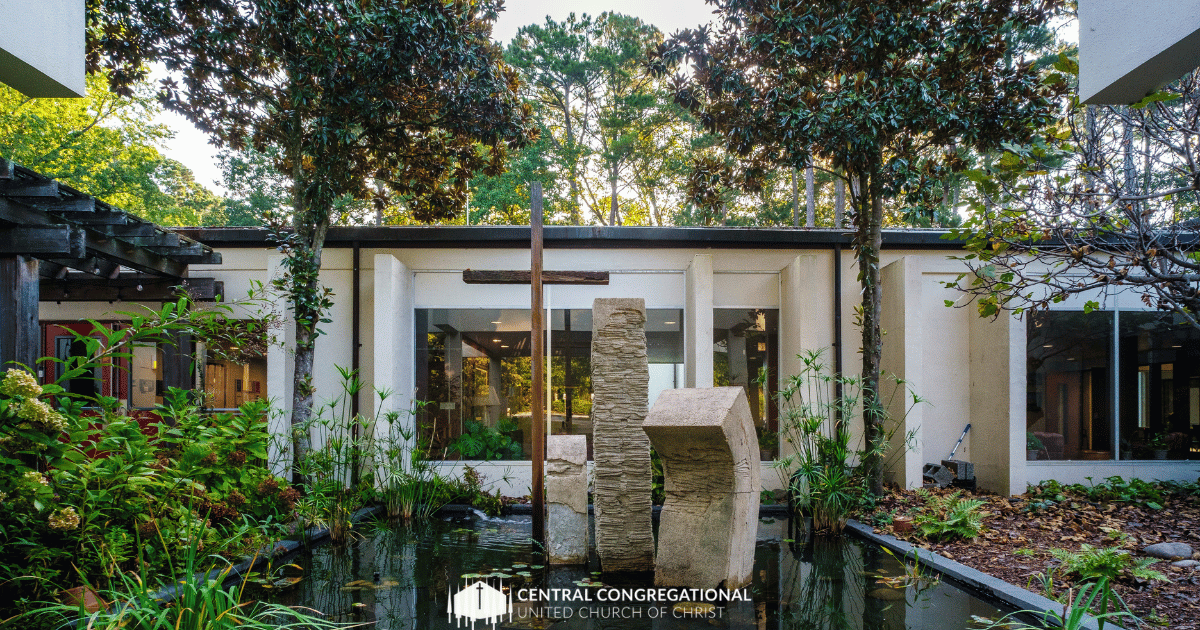
In March, while visiting a friend in New York, we went to the observation deck of Freedom Tower, which sits in the footprint of the original World Trade Center complex. It’s a gripping experience. The construction of that tower was meant, in some way, to show that this nation was unbowed in the face of terror. And even so, there is the reality that one is in the shadow of great grief. In a short morning, the world was forever changed.
There are countless stories of sacrifice, heroism, and hope in the face of the unimaginable:
I’ve told you before that I try to live my life in a sort of response to a midrash that suggests that angels counseled God against making us. Yet, God chose to do so anyway. I have to believe that if those first angels saw how ordinary people showed up on 9/11, they would turn to God and say: Thank you for insisting on creation.
As I reflect on this solemn day, I must also note my lament for the countless innocent people in this country and around the world who have been killed, forced to migrate, abused, and made to suffer in an effort to defeat terror. May we acknowledge their pain and the deep unfairness that they have paid a price for crimes they did not commit.
The world we live in today is less trusting, less cohesive, more fearful of the “other,” and we are witnessing a distressing rise in xenophobia and Islamophobia. We must do all we can to combat the advance of such rhetoric.
As Americans, we will never be more than the sum of our parts. I pray that we might commit ourselves to the hard work we must do here at home, so that we might more fully live into the promise of a country that really is out of many, one.
As Congregationalists, we are called to do what reasonably we might, in our corner of the world, to build a more just world for all. Many of you are doing that work every single day. I know that will continue.
In the face of great terror and unimaginable loss, God calls us to be servants in the service of the whole human family; to resist the powers of evil; and, to join Jesus in sharing the grace of baptism & the reconciliation of communion.
I pray that this 25th anniversary of 9/11 might spark in us a renewed commitment to responding to that call.
May peace fill our hearts, our world, and our universe,
Rev. Thomas
Aug 07, 2026
My time in Vancouver is nearing its end. I’ve enjoyed this week gathering with a little more than a dozen other clergy at the Guder Pastoral Retreat, which is being hosted at the University of British Columbia. I’m used to being the only UCCer in some clergy spaces, but not the only American! All the other participants in the retreat are Canadian clergy serving in the United Church of Canada or The Presbyterian Church in Canada.
I’ll be away this Sunday, but I hope that you’ll still be in worship. Rev. Cassandra Henderson, the Executive Director of the Interfaith Children’s Movement. Prior to this role, Rev. Cassandra, an ordained Baptist minister, served as an Assistant Pastor at Ebenezer Baptist Church. She has preached at Central before, and I’m so glad that she said “yes!” to the invitation to preach here again. Please offer her the warm and wonderful welcome that we’re becoming known for.
With you in spirit,
Thomas
Jul 31, 2026
I’ve Been Meaning to Ask: Where Do We Go From Here?
That’s a wide open question for the future! As our Summer worship series comes to a close, it’s important to understand that that question doesn’t mark the end of this journey. It simply welcomes in the next chapter. I’m sure that folks are tired of hearing the words “in discernment” or “in transition,” but I think that part of that is the fault of how denominations often use that language! In the UCC, we say that a church without its pastoral roles filled by settled ministers is a church that’s “in transition.” The honest reality is that the church should always be in discernment… in transition. How else can we be attentive and responsive to the Still-Speaking Voice of God?
So, again, I ask: Where Do We Go From Here?
On Sunday, we’ll close out this worship series, celebrate our 4th Annual Blessing of the Backpacks, and share communion. If you worship online, please have bread and a fruit of the vine ready. And, if you’re someone who would like to receive communion at home, in a care facility, or elsewhere, please email Rev. Thomas to set that up.
Homework this week: Bring a friend on Sunday!
See you Sunday,
Thomas
P.S. I’ll be in Vancouver from Aug 4 – 9, participating in the Guder Pastoral Retreat.
Jul 17, 2026

Dear Siblings,
Can I brag on the youngest among us for a moment? Last week in worship, we talked about our common origin in the “dust of the earth and the stars of the sky.” After worship, one of the kids was so excited to share with me, Linda, and Josie that he made a person out of the clay and stardust from the Story for All Ages. A+ for listening to the story!
And, after the Celebration of Life for Lennie Vaux, a few of the great-grandchildren were sitting in Kids Space waiting for the reception to end. The youngest in the group, S., looked up and said:
S: Who are you?
T: I’m Thomas! Who are you?
S: I’m S!
S: Wait, where do you live?
T: I live in Downtown Decatur. Where do you live?
S: I live in Ellijay! It’s kind of far from here…
He wasn’t even in worship, and yet the questions we asked each other were born out of real curiosity and led to genuine connection. In worship this week, we’ll continue in our I’ve Been Meaning to Ask series. On Sunday, we’ll sit with the question: Where Does It Hurt?
If you’re curious about what’s been bouncing around my head as I’ve prepared this Sunday’s sermon, check out the “Sermon Sandbox” later this evening. You can find the sandbox on our website or on our facebook page. Speaking of our facebook page, please interact with us there! Our street sign needs a repair, so, for right now, Facebook is the best way to share a bit about who we are at Central.
Aside from worship, opportunities abound for community and connection! Check those out below.
See you Sunday(or sometime soon),
Thomas
Jul 10, 2026
Hey Siblings!
I’m SO EXCITED to launch our July(and smidge of August) worship series: I’ve Been Meaning to Ask. This series invites into a season of curiosity, intentionality, and community. My prayer is that it will help all of us set the stage for the kind of radically collaborative ministry that is possible with co-pastors and partners in ministry.
On Sunday, we’ll start with: Where Are You From? Think about how you might answer that question? Think about what you’re expecting to hear when you ask someone that question.
In our scripture readings on Sunday, we’ll sit with the question, laden with bias: Can anything good come from Nazareth? Maybe. Maybe not. Let’s find out together. Come to worship ready to get your hands dirty! Okay, not really dirty. But, you will use them on Sunday. There’s no Sermon Sandbox for this week, but I encourage you to check out last week’s! Some of those things might pop up in this week’s sermon too.
This Sunday, we’ll also celebrate the life of Lennie Vaux at 2pm. I hope that you’ll be able to join us in this celebration and memorial of Lennie.
May love be our song and our prayer! See you Sunday,
Thomas
Jul 03, 2026
Dear Siblings,
I’ve been thinking a lot about the relationship, if any, between the American experiment and the Protestant reformations. I think there’s something really important there. In the past few weeks, I’ve been exploring Mercerberg Theology, one of the cornerstones of the Evangelical & Reformed Church that is now part of the UCC, and some of their earliest theologians offer the notion that the Protestant reformations were an inevitable consequence of the process of becoming. Put another way, reformations weren’t a one time event or separation, but rather the continuation of the work of more fully living into God’s call for creation.
I think this is similar to the becoming project of this republic. The preamble of our constitution is actually very clear… “in order to form a more perfect union.” There’s an acknowledgement that this experiment isn’t a “one-and-done” endeavor, but rather a constantly unfolding, emerging and reemerging project of becoming something that more fully realizes the highest ideals, visions, and aspirations of who we could be.
Indeed, in the long history of this republic, there is much to celebrate and much to lament. And through it all, we are here. 250 years old. On Sunday, we’ll sit with text from Zechariah and Matthew, which both also form an understanding of “becoming.” If you wanna know a bit about what’s informed some of my thoughts for Sunday, check out the Sermon Sandbox!
Please remember that we’ll have a special Sunday School class on Sunday: America 250: The Words We Remember! This group will gather in Room 206 at 9:45 AM. You can learn more about it below!
See you Sunday (and be safe this weekend),
Thomas
Jun 26, 2026
Dear Siblings,
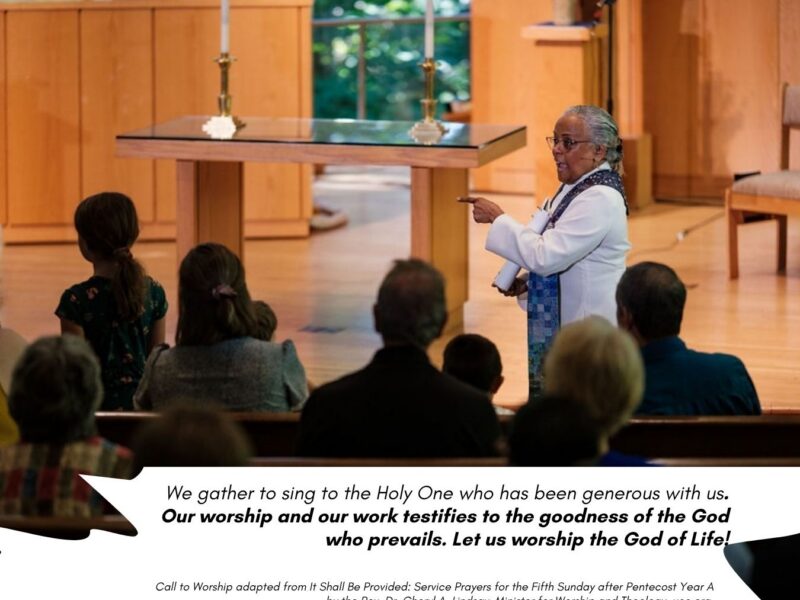
This Sunday, we’ll gather in the bittersweet celebration of Rev. Liz’s ministry with Central. I’m grateful to our History Team, particularly Allen Moye, who combed through our archives and determined that Rev. Liz is the 33rd Senior Minister of Central Congregational UCC. Our service on Sunday will reflect on the words of the psalmist found in Psalm 89:1-4, 15-18. We’ll have special music during the service too!
Please be sure to plan to stay after the service for a farewell luncheon in honor of Rev. Liz!
See you Sunday,
Thomas
Jun 19, 2026
Dear Members, Friends, Siblings, All,
Happy Juneteenth!
Blessed Juneteenth, too, if you can manage it. It’s a new observance for many of us and a wonderful excuse to celebrate our checkered history as a nation. Two hundred and fifty years of trying to get along with each other and find forgiveness, reconciliation, and grace. It has not been “all lambs and bunnies,” as Roberta Bondi would say, but I have to believe we have come a long, long way and perhaps even done our best. Jeez, it’s hard to leave what we know for a place we don’t.
On this last, please see Ken Samuels’ Daily Devotional here!
And now, speaking of what we know (or think we do) and what we don’t, you may be asking what I was doing in Paris. And you may not be asking but I want to tell, so. If I told you this story before, please forgive me.
When I lived in Paris, lo, these many years ago, it became my practice on Fridays to leave the first dance class I had ever had, where I constantly fell short of the glory of God and the dance teacher, and where my inability to understand either dance language or French was on display mercilessly, to take a bus ride. To console my wounded spirit, I would look for a route that I had not ridden before and take it to the end of the line, where I would get down and get lost. In a neighborhood that I’d not seen before. (Paris has hundreds of neighborhoods, all unique and fascinating.)
To make these little sojourns interesting, I had two goals in mind as I wandered. First, to find a different bus to go home and, second, to sample the pastries of a different patisserie. Over time, a little contest emerged to see who made the best croissant, then pain au raisin, and finally, gâteaux aux amandes. Oh, the butter! I got lost, repeatedly. I got found just as often. I saw parts Paris that I would never have seen and have not seen since. And I learned this: To be found, you must first be lost. (The best croissant turned out to be downstairs from me, chez M. Weber.)
The gospel reading for this week is Matthew 10:24-39. That passage is full of the wonderful paradoxes included in “the cost and joy of discipleship” and the Christian life. All the week’s readings brought my Paris practice to mind. My personal paraphrase of Matt 10:39: “Those who find life in following in the way of Jesus will lose it, those who lose life for Jesus’ sake will find it.” But you gotta risk being lost for a time, find the faith and trust in between. This is the really hard part. Pray God there’s a patisserie along the way to keep your courage and faith up. The risks of lost are many, the rewards even more.
This is my last Friday eNote as Designated Term Senior Minister at Central Church. It’s time to “find my way” and the bus that will take me to a neighborhood I don’t know and then find my way home to another location and vocation. I’m sure I did not know that when I set out on that trip earlier this month, but I had a practiced pattern there. At home now, I am sure there was method I could not yet see in the trip. “And G-d heard…” Genesis 21:17
Sunday at Central has lots to offer including, adult Sunday School classes at 9:30 am; 11:00 am worship, in the house and online; children in the foreground and background, making their precious noises; a congregational budget meeting (whohoo!); and the fellowship of all of us together on this journey by stages with music, prayer, flowers and Coffee & Conversation. A time to gather in celebration of Fathers, and communion with God and neighbors. I hope your wanderings will find you “home” with us.
Love and hugs,
Rev. Liz
PS I did miss you, Paris notwithstanding. I will miss you again. It’s been a great ride.
Jun 12, 2026
I’m looking forward to being with you again on Sunday. I’m grateful to Rev. Cecelia for offering the sermon last week, and to everyone in the Gen XYZ(formerly 20s/30s) group for leading worship alongside Josh.
Rev. Liz was(and still is) in France! And I was in Savannah and Tybee Island. Returning to work was really fun this week. On Wednesday, we closed our first cohort of the Sacred Seasons conversation group. I wasn’t sure what would happen in that space, nor who all would show up, but I’m so glad that for six Wednesdays, a dozen people showed up for two hours, to sit and talk about the reality of death. That space became, in the words of almost every participant, a “trusted and safe space” to talk about the things that are in their hearts and on their minds. I’m sad that our cohort has ended, but I’m also looking forward to the group that will gather in the fall… perhaps you’ll be part of that group.
On Thursday, I spent an afternoon with the Harrisons, touring Red’s Farm Preserve in Ormewood. The urban farm is a really wonderful testament to vision, stewardship, and community partnership. It’s also home to some wonderfully ripe blueberries :).
You can learn more about Bill Harrison’s late son “Red” in this beautiful obituary published in the AJC.
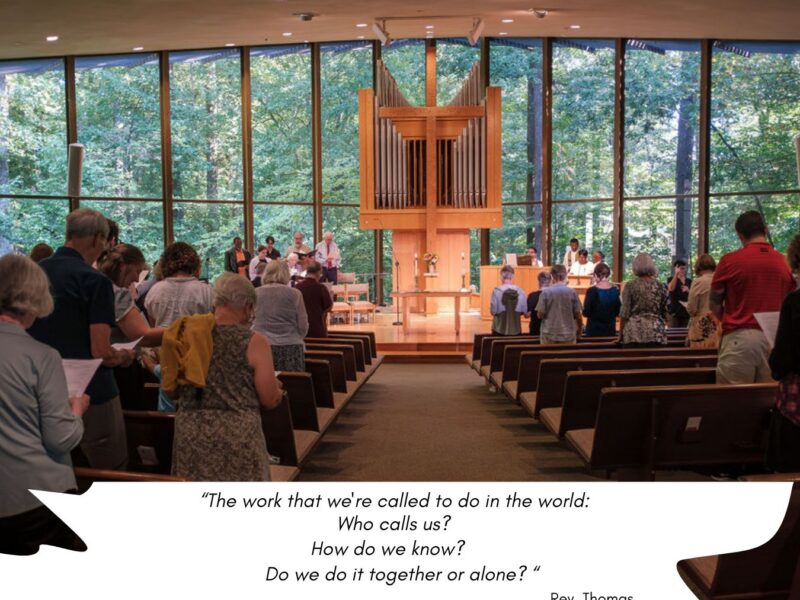
In both of these experiences, I’ve thought a lot about the work that we’re called to do in the world. Who calls us? How do we know? Do we do it together or alone? And I think there’s probably some question of “worthiness” in there too. On Sunday, the lectionary invites us into the story of Jesus commissioning the disciples, which hits on all the things I’ve already been thinking about. I have a hunch you’re thinking about them too. So, let’s make meaning together on Sunday, according to our best endeavors… the Lord assisting us.
See you Sunday,
Thomas
Sign up to receive our newsletter!